
A premium 3D website is a website with a unique design, scroll animations and three-dimensional elements, made for brands that sell through their image. It is worth it when the impression plays a part in the customer’s decision, and it only works if it is built with speed, SEO and accessibility as priorities.
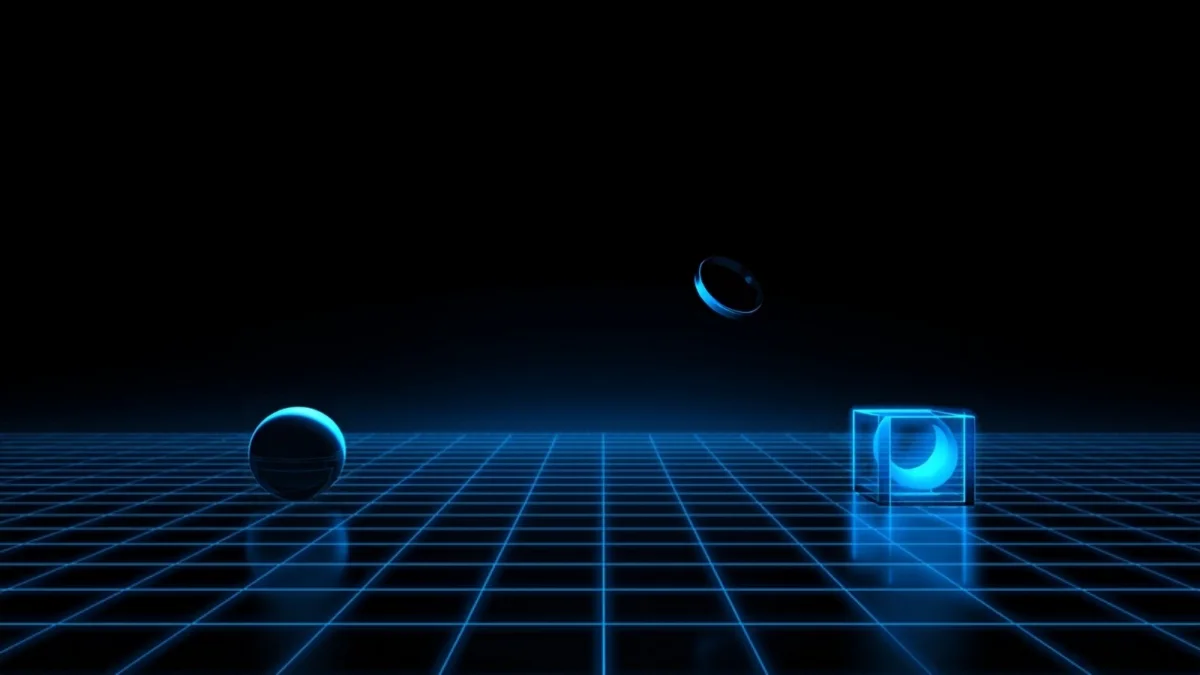
The websites you see winning design awards usually share a few things: motion that follows the scroll, 3D objects that react to the mouse and a rhythm that feels like a film. The question for a business is not whether they are impressive, but whether they fit its own case and whether they can be built without hurting speed and SEO. In this guide you will see when it is worth it, how it is done properly and what it costs.

What a premium 3D website is
It is not simply a website that “moves”. It usually combines three things:
- A unique design built from scratch, with no ready-made template, so it fits the identity of the business.
- Scroll animations: elements that appear, move and change as the visitor goes down the page.
- 3D elements that run in the browser with WebGL and libraries such as Three.js: objects, backgrounds and effects that react to movement.
WebGL is a browser technology that needs no plug-in. According to the Web3D Survey, it is supported by about 98% of the reports it records, so the great majority of visitors can see 3D without any setup.
Who a premium 3D website is for
A premium website suits businesses where the image and feel of the brand weigh on the buying decision:
- Brands and high-value products, such as furniture, jewellery, fashion or drinks, where the customer wants to “see” the product up close.
- Hotels, restaurants and travel services, which sell an experience before a price.
- Real estate, architecture and construction firms, which want to present spaces and projects convincingly.
- Creative companies and startups, for whom the website is itself a sample of their work.
- Events and product launches, with one central message and a short life.
On the other hand, if you offer a clear service that customers look for on Google, for example a plumber, an accountant or a dentist, a clean and fast business website with good SEO usually brings more. See the packages and prices to match your need.
What you gain from 3D
The main benefit is the impression: a website that stands out from competitors and shows professionalism from the first screen. In ecommerce, 3D also has measurable results, but they must be read with care.
In its Shopify case study, Rebecca Minkoff reports that shoppers who interacted with a 3D model were 44% more likely to add it to the cart and 27% more likely to place an order, while those who viewed it in augmented reality (AR) were 65% more likely to buy.
How to read these numbers. They are the company’s own figures, with no published baseline or sample size, and they refer to visitors who chose to interact. They show interest, not a guaranteed increase in sales. That is why we do not promise percentages.
Speed: the most important issue for a premium 3D website
3D is heavy by nature: libraries, models and textures that have to be downloaded and run on the visitor’s device. Google measures user experience with Core Web Vitals and, according to web.dev, the “good” values are:
| Metric | What it measures | Good value |
|---|---|---|
| LCP | How quickly the main content appears | up to 2.5 seconds |
| INP | How quickly the page responds to actions | up to 200 ms |
| CLS | How stable the layout is | up to 0.1 |
To keep a 3D website within these limits, we follow specific rules:
- The first screen appears with text and an image, and the 3D scene loads afterwards, without delaying the main content.
- Models and images are compressed, and the scene keeps a low number of objects.
- The scene stops rendering when it is not visible on screen, so it does not use battery and processor.
- On weak devices and on phones, the scene is simplified or replaced by a static image.
- We measure with PageSpeed Insights before and after delivery and fix whatever falls outside.
SEO on a premium 3D website
Google, as it explains in its guidelines on JavaScript SEO, processes pages that use JavaScript in three phases: crawling, rendering and indexing. This means a website with 3D can be indexed normally, as long as the basic rules are followed:
- The text stays in HTML. Titles, paragraphs and services are not placed inside the 3D scene, because the scene cannot be read as text.
- Links are real links. Google discovers pages through normal links with an address (href), not through buttons that only work on click.
- Every page has its own title and description, and one H1.
- Critical elements do not depend on JavaScript. Google advises against relying on JavaScript to change noindex or other important directives.
For the basics of SEO, see the website SEO guide in 7 steps and our SEO services.
Accessibility and mobile
Motion is not pleasant for everyone. According to web.dev, effects such as parallax and zoom can cause dizziness or nausea in people with vestibular disorders. Users can ask their operating system for reduced motion, and a good website respects that: it removes decorative animations and keeps only what helps understanding.
On mobile, we do not simply copy the desktop. We design the experience separately, with lighter motion, large touch targets and fast loading. Also, although WebGL is widely supported, it does not run with the same quality everywhere: the Web3D Survey reports that about 3.45% of reports show possibly reduced performance. That is why there is always a fallback with a static image.
What a premium 3D website costs
The Premium package starts from €1,600 + VAT and includes a unique design, animations and technical SEO. The final budget depends on how complex the 3D is, whether you need your own 3D models and how many pages there are. In the guide on how much a website costs in Greece we show an indicative €1,500 to €4,000 and more for premium design, with a delivery time of 4 to 8 weeks.
The biggest difference from a simple website is the time for design and testing, because every animation needs tuning and checking on real devices. The yearly costs (domain, hosting, maintenance) stay the same as for any website.
Common mistakes
3D without a purpose. If the effect does not help the message or the sale, it is decoration that costs speed.
A long preloader. A loading screen that keeps the visitor waiting delays the main content and loses visitors.
Text inside the scene. What is painted in a canvas is read neither by Google nor by screen readers.
No fallback. Without a static image and reduced motion, the website fails on weak devices and excludes users.
How we build a premium 3D website
- Brief and goal: what you sell, to whom and what the visitor should do.
- Concept and design: page structure, visual direction and a motion plan.
- Build with performance limits: the 3D is added to an already fast base, not the other way round.
- Testing: PageSpeed, mobile, reduced motion and an SEO check.
- Delivery and measurement: connection to Search Console and Analytics, so you can see results.
A premium 3D website is only as good as its foundations, so every one starts with the same base as our other websites. You can see samples of our work in our projects and the service WordPress web design.
Want a website that stands out?
Tell us what you sell and we will tell you honestly whether 3D is worth it in your case, with a written quote, free and without commitment.
Frequently asked questions
Does 3D affect the SEO of a website?
It does not have to affect it negatively. Google reads the HTML and the JavaScript code, as long as the texts, titles and links are in normal HTML and not inside the 3D scene. The 3D works as an extension of the content, not as a replacement for it.
Is a website with 3D slow?
It can be, when it is built without performance limits. Built properly, it loads the text and the first-screen image first and only then switches on the 3D. Our target is to stay within the Core Web Vitals limits.
Does 3D work on a phone?
Yes on most devices, which is why we design a separate, lighter experience for mobile. Where a device cannot run the scene, a static image appears and the website works normally.
Do I need my own 3D models?
Not always. Many websites use abstract 3D elements or effects in the background. If you want to show a specific product, you need a 3D model of the product, which is priced separately.
Can I edit texts and photos myself?
Yes. Texts and images are managed from WordPress like on any website, while the 3D and the animations are changed only with our help.
How much does a premium website cost?
The Premium package starts from €1,600 + VAT and the final cost depends on the design, the animations and the 3D elements. See the packages and prices or the guide on how much a website costs in Greece.